



Psychosomatic Wellness: We’ve all experienced it: the “butterflies” in your stomach before a big presentation, the pounding headache after a stressful week, or the literal heartache that accompanies grief. For decades, Western medicine treated the mind and the body as two separate entities—like a computer’s software and hardware.
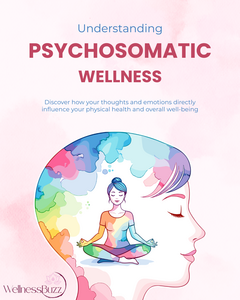
However, modern science is proving what ancient traditions have known for millennia: the mind and body are an integrated circuit. This is the essence of Psychosomatic Wellness.
In this post, we’ll explore how your thoughts translate into biological signals and how you can harness the mind-body connection to improve your physical health.
What is the Mind-Body Connection?
At its simplest, the mind-body connection is the link between a person’s thoughts, feelings, and behaviors and their physical symptoms.
The term “psychosomatic” often gets a bad rap, sometimes mistakenly used to imply that an illness is “all in your head” or imagined. In reality, psyche (mind) and soma (body) are constantly communicating. When your mind perceives a threat or an emotion, it triggers a cascade of chemical and electrical signals that affect everything from your digestion to your immune system.
The Science: How Thoughts Become Biology
How does a thought—something intangible—turn into a physical sensation? The answer lies in our chemical messengers.
- The Stress Response: When you think a stressful thought (“I’m going to fail”), your hypothalamus signals your adrenal glands to release cortisol and adrenaline. Over time, chronically high levels of these hormones lead to inflammation, weakened immunity, and increased risk of heart disease.
- The Gut-Brain Axis: Did you know your gut contains hundreds of millions of neurons? Often called the “second brain,” the gut is highly sensitive to emotional signals. This is why anxiety often manifests as digestive distress or Irritable Bowel Syndrome (IBS).
- Neuroplasticity: Your brain is constantly rewiring itself based on your repeated thoughts. Positive, mindful thinking can actually strengthen the neural pathways associated with resilience and calm, lowering the body’s baseline “alarm” state.
The Physical Toll of Negative Thought Patterns
Ignoring the mind-body connection can lead to tangible health issues. Research has linked chronic emotional distress and “negative affectivity” to several physical conditions, including:
- Chronic Pain: Emotional trauma can lower pain thresholds, making physical injuries feel more intense or last longer.
- Cardiovascular Health: Chronic anger and hostility are significant predictors of heart attacks.
- Skin Conditions: Stress can trigger or worsen flare-ups of eczema, psoriasis, and acne.
- Insomnia: A racing mind prevents the body’s parasympathetic nervous system (the “rest and digest” mode) from taking over.
Harnessing the Power of Psychosomatic Wellness
The good news is that if the mind can trigger illness, it can also facilitate healing. Here are four ways to begin cultivating psychosomatic wellness:
1. Practice Mindfulness and Meditation
Mindfulness isn’t just about relaxation; it’s about observation. By noticing your thoughts without judgment, you prevent the “fight-or-flight” response from spiraling. Clinical studies show that regular meditation reduces markers of inflammation and improves heart rate variability.
2. Cognitive Reframing
Our bodies react to the story we tell ourselves. Instead of saying, “This situation is a disaster,” try reframing it as, “This is a difficult challenge, but I am learning how to handle it.” This shift in perspective changes the chemical signal sent to your body, moving it from a state of “threat” to a state of “engagement.”
3. Somatic Movement
Since the mind-body connection is a two-way street, you can use your body to calm your mind. Practices like Yoga, Tai Chi, and Breathwork use physical movement and controlled breathing to send safety signals to the brain, effectively “turning off” the stress response.
4. The Power of Intentional Rest
Rest is not just the absence of work; it is a physiological necessity. When you prioritize sleep and relaxation, you give your body the “biological green light” to perform cellular repair and toxin removal.
The Bottom Line
Your thoughts are not just fleeting ideas; they are instructions for your cells. While we cannot always control the stressors that life throws our way, we can control our internal response to them.
Psychosomatic wellness is about taking a holistic approach to your health. By nourishing your mind with positive, resilient thoughts and listening to the signals your body is sending you, you aren’t just “thinking happy thoughts”—you are literally building a healthier biology.
Are you ready to listen to what your body is telling you? Start today by taking five deep breaths and acknowledging the connection within.


Leave a Reply