



If you’re reading this, chances are you’ve already heard the buzzword “wellness” floating around your Instagram feed, your office water cooler, or that ever‑growing list of self‑care books on your nightstand. But what does “well‑being” actually look like in the middle of a hectic workday, a chaotic family schedule, or a bustling city commute?
In this post, I’m breaking down 10 evidence‑backed, bite‑size wellness tips you can start using today—no expensive gadgets, no drastic diet overhauls, and certainly no extra hour of sleep you don’t have. These are the small, sustainable habits that compound over weeks and months, turning ordinary days into a healthier, happier life.
Grab a coffee (or a glass of water—hydration first!), settle in, and let’s get practical with some simple wellness tips.
1️⃣ Kick‑Start Your Morning with a “Micro‑Movement” Routine
Why it matters:
Research from the American College of Sports Medicine shows that just 5‑10 minutes of light activity after waking can spike dopamine, improve mood, and boost metabolic rate for the rest of the day.
How to do it:
| Time | Move | Duration |
|---|---|---|
| 6:30 am (or whenever you get up) | Gentle stretch series (neck circles, cat‑cow, calf raises) | 2 min |
| 6:32 am | Bodyweight circuit (10 squats, 10 push‑ups, 10 lunges each side) | 3 min |
| 6:35 am | Deep‑breathing or a quick meditation | 2 min |
Pro tip: Set a phone alarm with a fun tone, and keep a yoga mat rolled out next to your bed so the effort to start is minimal.
2️⃣ Hydrate with Purpose, Not Just Plain Water
The myth: “Just drink 8 glasses a day.”
The science: Your body’s water needs depend on body weight, activity level, climate, and even caffeine intake. A simple formula:
Weight (lb) ÷ 2 = ounces of water
For a 150‑lb person → 75 oz (~2.2 L) daily, plus extra for exercise.
Tips to make hydration stick:
- Flavor it naturally: Add cucumber slices, a splash of citrus, or a few fresh mint leaves.
- Use a smart bottle: Some reusable bottles glow or send reminders when you haven’t taken a sip in the last hour.
- Link it to habits: Drink a glass after every bathroom break, before each meal, and at the start of every video call.
3️⃣ Prioritize “Digital Sunset” – 30 Minutes of Screen‑Free Time
Problem: Blue‑light exposure after 7 pm suppresses melatonin, making it harder to fall asleep.
Solution: Digital Sunset – a designated period before bedtime when all screens are off.
Implementation steps:
- Set a timer on your phone for 30 minutes before your intended bedtime.
- Swap screens for analog: Read a paperback, journal, or practice a calming hobby (knitting, drawing).
- Dim the lights: Use warm amber bulbs or a Himalayan salt lamp to cue your body for sleep.
Result: A smoother transition to sleep, better REM cycles, and a refreshed morning.
4️⃣ Eat the “Rainbow” – Colorful, Whole‑Food Meals
Nutrient density matters more than calorie counting. Each color group brings a unique set of phytonutrients:
- Red (tomatoes, strawberries) → lycopene, anthocyanins
- Orange/Yellow (carrots, peppers) → beta‑carotene, vitamin C
- Green (leafy greens, broccoli) → folate, lutein
- Blue/Purple (berries, eggplant) → resveratrol, flavonoids
- White/Beige (mushrooms, cauliflower) → potassium, fiber
Quick plate template:
| Plate Section | Food Ideas | Portion |
|---|---|---|
| Protein | Grilled salmon, chickpeas, tofu | ¼ |
| Veggies (colored) | Mixed stir‑fry (red capsicum, yellow squash, kale) | ½ |
| Complex Carb | Quinoa, sweet potato, brown rice | ¼ |
| Healthy Fat | Avocado slices, olive oil drizzle | — |
Tip: Prep a “rainbow snack box” for work: grapes, carrot sticks, hummus, almonds.
5️⃣ Master the 4‑7‑8 Breathing Technique for Instant Calm
Background: Developed by Dr. Andrew Weil, this breath pattern taps the parasympathetic nervous system, lowering heart rate within minutes.
Steps:
- Exhale completely through your mouth (1 sec).
- Inhale quietly through your nose for 4 seconds.
- Hold the breath for 7 seconds.
- Exhale through the mouth for 8 seconds.
Repeat 4‑5 times whenever you feel stress spikes – before a meeting, after lunch, or during a commute.
6️⃣ Move More Throughout the Day – The “10‑Minute Rule”
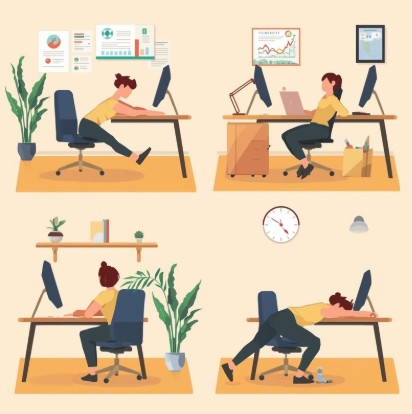
Sitting too long is the new smoking, according to JAMA Internal Medicine.
Strategy: Every 90 minutes, stand up and move for 10 minutes.
Micro‑activities:
- Walk to the water cooler instead of grabbing a bottle.
- Do a quick set of desk squats or calf raises.
- Take a “walking meeting” for 5‑10 minutes.
Set a calendar reminder titled “⚡️ Move!” to keep it consistent.
7️⃣ Foster Social Connection – “Mini‑Catch‑Ups”
Human connection is a pillar of mental wellness. Even a 5‑minute chat can lift mood and reduce cortisol.
Actionable ideas:
- Coffee‑break buddy: Pair up with a colleague for a quick virtual coffee.
- Family “high‑five”: At dinner, share one thing you appreciated that day.
- Neighborhood nod: Wave or say hi to the person you see daily on your walk.
The goal is quality, not quantity—meaningful interaction beats endless scrolling.
8️⃣ Practice Gratitude Journaling (One Sentence a Day)
Studies from Harvard’s Positive Psychology Lab reveal that writing down three things you’re grateful for each night can improve sleep quality and overall life satisfaction.
Simplify:
- Keep a tiny notebook on your nightstand.
- Write just ONE sentence (e.g., “I’m grateful for the sunshine on my walk”).
No need for long prose—consistency beats length.
9️⃣ Set a “Weekly Reset” – Review, Reflect, Refine
Every Friday (or the day that works for you), allocate 15 minutes to a mini‑audit:
- Review your hydration, movement, sleep stats (use a simple spreadsheet or an app).
- Reflect on what felt good and what felt forced.
- Refine one habit for the next week—add a new tip, tweak a time, or replace a struggling habit.
Seeing progress on paper fuels motivation.
🔟 Embrace the Power of “No” – Boundaries as a Wellness Tool
We often think wellness equals “more”—more exercise, more nutrition, more productivity. In reality, saying no protects your energy and prevents burnout.
How to practice:
- Identify your top three priorities each week. Anything else that doesn’t align can be politely declined.
- Use a script: “Thank you for thinking of me, but I need to focus on X right now.”
- Schedule “off” blocks in your calendar—just as you’d book a meeting, book a “do‑nothing” period.
Boundaries create space for the habits you truly want to nurture.
Putting It All Together – A Sample “Day Blueprint”
| Time | Action |
|---|---|
| 6:30 am | Micro‑movement (5 min) |
| 6:40 am | Hydration: 16 oz water + lemon |
| 7:00 am | Breakfast: oatmeal + berries + nuts |
| 9:30 am | 10‑minute walk or desk stretch |
| 12:00 pm | Lunch: rainbow salad + quinoa |
| 1:00 pm | 4‑7‑8 breathing (2 min) before meeting |
| 3:30 pm | Digital Sunset begins (no screens after 8 pm) |
| 5:30 pm | Evening walk (10 min) + hydration |
| 6:30 pm | Dinner: grilled salmon + steamed broccoli |
| 8:00 pm | Gratitude journal (1 sentence) |
| 9:00 pm | Light reading (screen‑free) |
| 9:30 pm | Bedtime routine: 4‑7‑8 breathing, lights dim |
| 10:00 pm | Sleep (aim for 7‑8 hrs) |
Feel free to shuffle the timing to suit your schedule—what matters is the pattern, not the clock.
Final Thoughts: Wellness as a Lifestyle, Not a Checklist
If you’ve ever felt overwhelmed by the sheer volume of “wellness advice,” you’re not alone. The secret isn’t to cram every tip into your day; it’s to choose a handful that resonate, practice them consistently, and let the compounding effect do the rest.
Start with one or two of the tips above, give yourself two weeks to integrate them, then add another. Celebrate the small wins (a restful night, a clearer mind, a brighter mood), and watch how they ripple into every facet of your life.
Your mission, should you choose to accept it:
Pick ONE of the numbered tips, try it for the next 5 days, and notice the difference.
Drop a comment below sharing which tip you chose and how it felt. I’ll be cheering you on!
Stay vibrant, stay balanced, and keep thriving!
If you found this post helpful, please share it with a friend who could use a wellness boost.




Leave a Reply