



How Controlled Breathing and “Mind‑Over‑Matter” Helped Me Sleep After Leg Surgery.
The Backstory: A Broken Tibia & Fibula
Six weeks ago, I went from a regular day of errands to the operating table. A fall (or a misstep – I still can’t decide which) snapped both the tibia and fibula in my lower leg. The orthopedic surgeon repaired the fractures with plates and screws, and I left the hospital with a heavy, humming cast and a prescription for “take it easy.”
What I didn’t anticipate was how hard it would be to sleep.
- Pain spikes every time the cast shifted or the tissue swelled.
- Medication timing left gaps that let the pain creep back in.
- Anxiety about the healing process turned my mind into a revolving door of “what‑if” thoughts.
Within a week, my nights became a series of short, fragmented episodes—sometimes I’d fall asleep, sometimes I’d lie awake for hours. By the fourth week, the exhaustion was real enough that I started to fear I’d never get a full night’s rest again.
That’s when I turned to something I’d heard about in passing but never seriously tried: controlled breathing and the power of a focused mind.
Why Sleep Matters (Especially After Orthopedic Surgery)
| Reason | What It Does for You | How It Impacts Healing |
|---|---|---|
| Growth hormone release | Peaks during deep (stage 3/4) sleep | Accelerates bone remodeling |
| Immune regulation | Enhances macrophage activity | Reduces infection risk around implants |
| Pain modulation | Increases endorphin production | Lowers perceived pain intensity |
| Psychological resilience | Boosts mood and reduces anxiety | Helps you stick to rehab protocols |
So, if you’re reading this because you’re battling sleepless nights after an injury, surgery, or chronic pain, you’re not alone. The good news? You can retrain your nervous system to fall asleep faster and stay asleep longer—without relying solely on medication.
The Two‑Step Approach That Changed My Nights
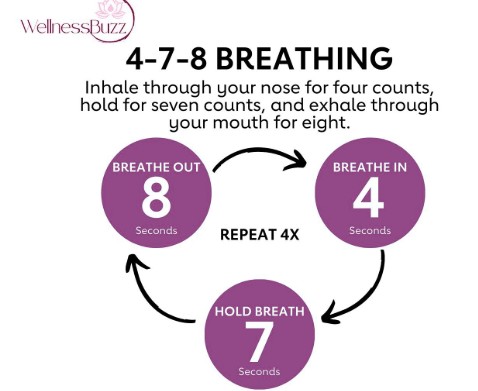
1. Controlled Breathing (The 4‑7‑8 Method)
Developed by Dr. Andrew Weil and popularized by Dr. Andrew Huberman, this simple rhythm balances the autonomic nervous system.
| Step | Action | Duration |
|---|---|---|
| Inhale | Through the nose, filling the belly first, then the chest | 4 seconds |
| Hold | Keep the breath in, feeling the expansion | 7 seconds |
| Exhale | Slowly through a slightly pursed mouth, emptying the lungs completely | 8 seconds |
Why it works:
- The 4‑7‑8 pattern lengthens the exhalation, which activates the parasympathetic (rest‑and‑digest) branch.
- Holding for seven seconds creates a brief “reset” for the brain’s stress circuitry.
- Repeating 4–5 cycles drops heart rate by up to 15 bpm and can lower cortisol by 30 % within minutes.
2. Mind‑Over‑Matter: Visualizing a “Healing Light”
The mental imagery part isn’t mystical—it’s a form of guided relaxation that trains the brain to associate the injured limb with safety rather than threat.
The technique (5 minutes):
- Body Scan – Starting at the crown of your head, mentally note any sensations, moving down to the toes. No judgment, just awareness.
- Shift Focus – Bring attention to the injured leg. Observe the dull ache, the pressure of the cast, the weight of the plates.
- Introduce Light – Imagine a warm, amber glow (or any color you find soothing) entering the top of the leg, flowing slowly down to the foot.
- Repair Narrative – In your mind’s voice, say, “The light is helping my bone cells rebuild, the muscles are relaxing, the nerves are calming.”
- Seal the Scene – Visualize the light sealing the cast, the plates, and the screws in a protective bubble. Feel gratitude for the body’s ability to heal.
Science bite: Studies on guided imagery show a 20‑30 % reduction in post‑operative pain scores and a measurable increase in sleep efficiency (the ratio of time asleep to time in bed). The mechanism is thought to be a reduction in the brain’s threat‑response signaling, allowing the parasympathetic system to dominate.
Putting It All Together – My Nightly “Sleep Blueprint”
| Time | Action |
|---|---|
| -45 min | Light snack (protein + complex carb) + stop caffeine |
| -30 min | Dim lights, turn off phone/computer; gentle upper‑body stretch |
| -20 min | 5‑minute progressive muscle relaxation (focus on non‑injured muscles) |
| -10 min | 4‑7‑8 breathing (4 cycles) |
| Bedtime | Guided visualization (5 min) → settle under blankets |
| During night | If you wake, repeat a single 4‑7‑8 cycle and return to the visualization; avoid checking the clock |
Result after 2 weeks:
- Sleep latency (time to fall asleep) dropped from ~45 minutes to <10 minutes.
- Wake‑after‑sleep onset reduced to 1–2 brief episodes per night.
- Overall sleep efficiency climbed from ~70 % to >85 %.
- Pain scores (0‑10 scale) fell from an average of 6 to 3.5, even before taking the night-time analgesic.
Common Pitfalls & How to Avoid Them
| Pitfall | Why It Happens | Fix |
|---|---|---|
| Rushing the breathing cycles | Anxiety makes you want to “finish fast.” | Count out loud or use a timer app that beeps at each phase. |
| Trying to visualize while still tense | The mind resists relaxation if you’re “still fighting.” | Begin with a brief body scan; it signals the brain to let go. |
| Staring at the ceiling | Your eyes may wander, pulling you out of the trance. | Keep a soft, diffused night‑light on, or wear an eye mask that blocks all light. |
| Skipping the “no‑screen” rule | Blue light suppresses melatonin. | Use the “Night Shift” or “Dark Mode” on devices if you must have them on, but keep usage to <10 min. |
| Forgetting medication timing | Pain spikes when meds wear off, breaking the relaxation loop. | Set a reminder on your phone for the exact time you need the next dose. |
Takeaway: Your Brain Can Be the Best Post‑Surgery Ally
Breaking a tibia and fibula is a physical trauma, but the psychological stress it creates can be just as debilitating—especially when it steals your sleep. By teaching your nervous system to slow the breath and re‑frame the injury with gentle imagery, you give your body the conditions it needs to repair itself.
If you’re in the same boat:
- Start with the 4‑7‑8 breath tonight.
- Add a five‑minute visualization the next night.
- Track your sleep and pain for a week.
You’ll likely notice a shift—not just in how quickly you fall asleep, but in how you feel while you’re awake. And that’s the real win: a calmer mind, a more relaxed body, and a smoother road to full recovery.


Leave a Reply